Edgar Rice Burroughs: The Father of Impossible Worlds
A Writer Who Never Planned to Be One
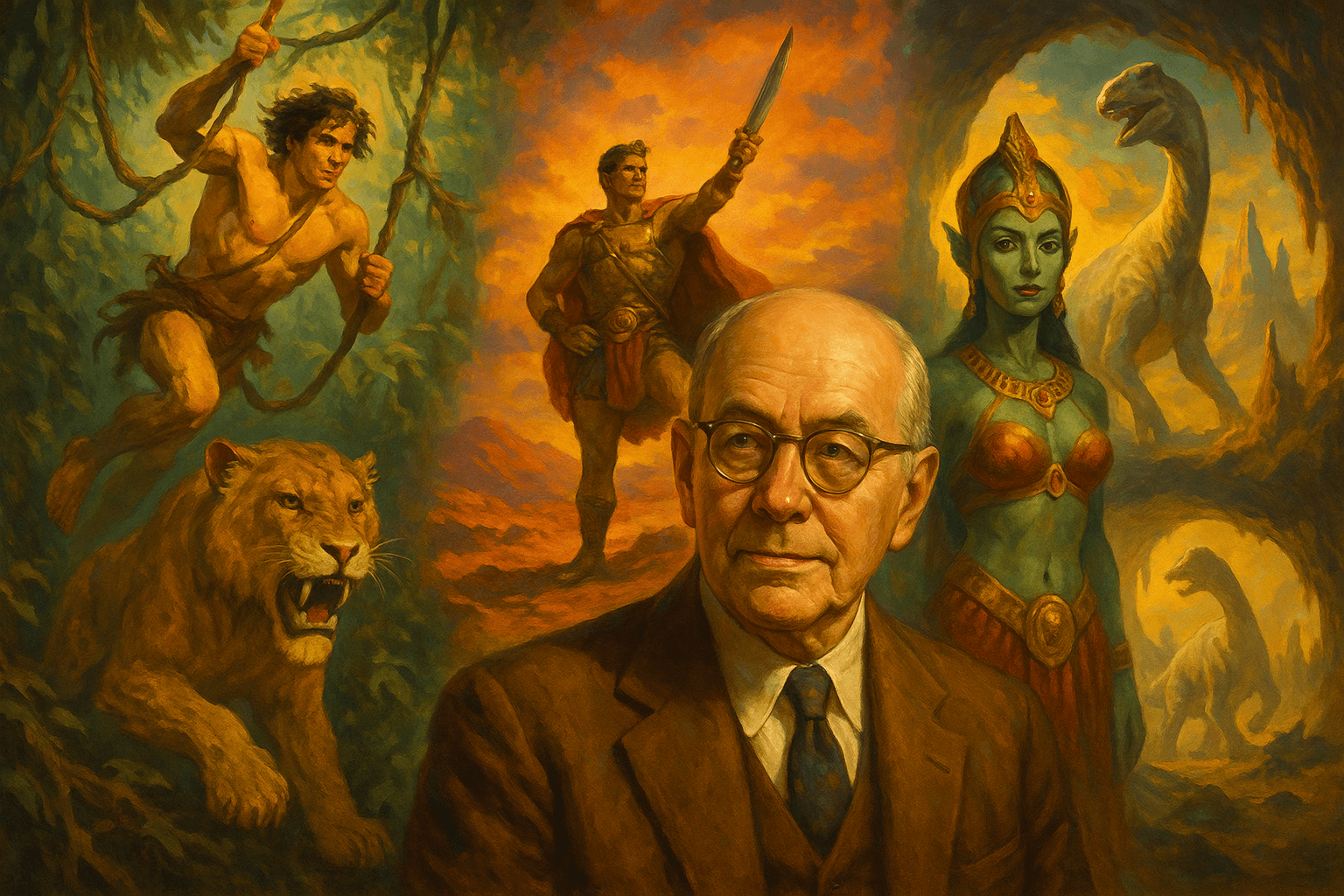
Edgar Rice Burroughs (1875–1950) didn’t begin his life dreaming of becoming a writer. Before devoting himself to literature, he worked as a salesman, a soldier, and even in a pencil sharpener company. But in 1912, his imagination unleashed something that would forever change popular literature: Under the Moons of Mars, published in serial form in All-Story Magazine.
The Birth of Legendary Heroes
That same year, 1912, also saw the birth of his most famous creation: Tarzan of the Apes. Tarzan became a cultural phenomenon, appearing in over 20 novels, films, radio series, and comic books. But Burroughs didn’t remain in the jungle—he traveled to Mars with John Carter, explored Venus, imagined lost kingdoms on Earth, and worlds beyond the stars.
The Burroughs Style: Relentless Adventure
Burroughs mastered the art of continuous action—short chapters, unexpected twists, and exotic settings. He wasn’t a writer of complicated prose, but of pure emotion. Readers knew that when they turned the page, something incredible was about to happen.
Influence on Science Fiction and Pulp
In the golden age of pulp magazines, Burroughs set the standard for fantastic adventure writers. His work inspired generations of authors and filmmakers, from Ray Bradbury to George Lucas. The blend of romance, combat, intrigue, and strange worlds remains the mold for many modern sagas.
From Paper to Kindle: A Living Legacy
Today, Burroughs’ stories are as available as they were more than a century ago—but now in digital format. The spirit he created— a bold hero, dangerous worlds, and the promise that adventure awaits on the next page—lives on in new generations of writers who draw from that same well.
Castor Pollux and the Echo of Burroughs
In the Imperium universe, Castor Pollux inherits that legacy: a hero who travels to distant worlds, faces impossible threats, and keeps readers on the edge of their seats. Like Burroughs, we seek to ignite the spark of adventure—and never let it fade.
Conclusion
Edgar Rice Burroughs didn’t just write stories—he created the map to explore impossible worlds. And we’re still following it.
Start your own adventure
Castor Pollux: The Adventure on the Prison Planet
Related Posts
Doc Savage: The Man of Bronze and the Golden Age of Pulp
Doc Savage: The Man of Bronze and the Golden Age of Pulp A Hero Larger Than Life Created by Lester
John Carter: The Pioneer of Galactic Pulp
John Carter: The Pioneer of Galactic Pulp Before Star Wars, before Flash Gordon, before the first human dreamed of colonizing
Castor Pollux and the Return of the Pulp Adventure
Castor Pollux and the Return of the Pulp Adventure The Birth of Pulp: Cheap Paper, Infinite Imagination In the early